

Written by Debbie Shatzer
For years, year-end returns were simply part of my routine as a golf shop buyer. If I had inventory left in categories that had return privileges, I evaluated it at the end of the season and sent back what made sense.
Over time, though, I started looking at that process differently. Not because the return privileges changed, but because I started paying more attention to everything that happened after I decided to make a return.
There was the freight. The restocking fees. The time we spent counting, organizing and boxing merchandise. The paperwork. Waiting for the credit. Checking the credit memo to make sure it was correct and getting everything submitted to accounting.
Eventually, I found myself returning fewer shoes and shorts because, in many cases, I realized we were better off selling through the inventory in my shop.
That’s when I began looking at return privileges differently.
A Good Return Strategy Starts With the Buy
Return privileges are valuable. They give us flexibility and reduce some of the risk that comes with carrying inventory.
But they can also make it easier for more inventory to find its way into the shop than we really need.
Not every shop has access to detailed sales history or reporting when it’s time to write the next buy. And sometimes a vendor program requires a certain dollar commitment or participation across multiple categories. Knowing that some of that inventory can be returned later can make it easier to commit to a little more than the shop might otherwise need.
But even returnable inventory has a cost while it’s sitting in the shop.
Those dollars are tied up in merchandise that isn’t selling when they could be invested in something that is selling, has a better margin or is something your customers are asking for.
That’s why a good return strategy starts when we’re writing the buy. How much do I realistically expect to sell? What did I sell last year? How much depth do I need? Can I replenish during the season if sales are stronger than expected?
I certainly don’t mean we should buy so conservatively that we’re constantly running out of product. There’s probably a happy medium between being too lean and carrying more inventory simply because we have the option to return it later.
It’s also important to know which parts of your buy actually have return privileges. For most golf shops, fashion apparel is a committed purchase, while return options are more common with shoes, shorts and pants, and hard goods such as drivers, fairway woods, irons, wedges and putters. Every vendor’s policy is different, so know the terms when you’re writing the order.
What Does That Return Really Cost?
It’s easy to look at a return and focus on the value of the merchandise we’re sending back. But that’s not necessarily what we’re getting back once all the costs are considered.
Start with the obvious ones: Is there a restocking fee? Who pays the freight?
Freight alone can be significant, especially when we’re talking about cartons of shoes or golf clubs. Shipping costs continue to increase, and these aren’t exactly lightweight packages.
Then there’s the part that’s harder to put a dollar amount on—our time.
Someone has to inventory the product, get the return authorization, box and ship everything, and complete the paperwork. Then we wait for the credit memo, make sure the quantities and dollars match what was returned, resolve any discrepancies and get everything to accounting.
We’ve all had enough experience with returns to know that sometimes the paperwork takes longer than the actual packing.
When you add all of that together, the value of a return credit isn’t necessarily the same as the value of the merchandise you’re putting in those boxes.
Return It—or Sell Through It?
Let’s say I have shoes left at the end of the season and they’re eligible for return.
I can send them back, pay any applicable freight and restocking fees, process the return and wait for my credit.
Or, before I start packing boxes, I can call my rep and ask: What other options do I have?
Depending on the vendor and situation, there may be an opportunity for an exchange or a net down that reduces my cost and allows me to put the merchandise on clearance.
Now the equation looks a little different.
There’s no return freight or restocking fee. There’s no time spent boxing and shipping the product. And instead of sending merchandise out the back door, I’m creating sales through the front door.
There’s another benefit that’s easy to overlook.
A clearance item can introduce someone to a product they might never have tried at full price.
Maybe a member has looked at a particular pair of premium golf shoes all season but wasn’t willing to spend the money. At the clearance price, they decide to give them a try. They wear them, love them and suddenly understand why that shoe costs what it does.
The next time they need shoes, they may be willing to pay full price.
That’s a pretty good outcome for merchandise we were getting ready to put in a box and send away.
Don’t Wait Until Year-End
The best time to deal with a slow seller isn’t always at the end of the year.
Keep an eye on your returnable categories throughout the season and involve your rep early. Depending on the vendor, you may be able to exchange slow-moving merchandise for something that’s working better, receive a net down or find another solution while there’s still selling season left.
Your rep can also help you look ahead. If you buy more conservatively next year, will inventory be available for replenishment? Are there return deadlines or costs you need to consider? Is the product performing differently in other shops?
And if you find yourself returning the same type of product year after year, that’s useful information too. Maybe you need less depth next season. Maybe it’s the price point, size range or product mix.
Every return can tell us something about the next buy.
Return Privileges Are Valuable—Use Them That Way
I still believe return privileges are a valuable tool for golf retailers. They give us flexibility, allow us to try new products and help protect our inventory investment.
What changed for me over the years wasn’t whether I used them. It was how I evaluated the decision.
Instead of automatically asking, “Can I return this?” I started asking, “What makes the most sense for my shop?”
Sometimes that meant making the return. Sometimes it meant working with my rep on another option. And sometimes it meant putting a great price on the product, creating some additional sales and having a member walk away feeling like they got a great deal.
There’s no one right answer.
The value of a return privilege is having options. The opportunity is making sure we’re choosing the one that works best for our shop.
To join a merchandiser community and gain weekly educational opportunities and resources, sign up to become a member of the AGM.
Year-End Returns: An Inventory Tool, Not an Exit Strategy
Are freight, restocking fees, paperwork, and time really worth the return? Rethink inventory and discover [...]
Aug
What They Really Sell at St Andrews, the Home of Golf
From tartan to the Swilcan Bridge, discover how St Andrews turns the history and emotion [...]
Aug
Beyond the Polo: How Yardage Company Is Bringing Custom Graphics to Golf Shops
Discover how Yardage Company brings golf course stories to life through custom graphics, T-shirts, hoodies, [...]
Aug
Members Notice What You Cannot Easily See: Mid-season Walkthrough of Your Pro Shop
Have you gone shop-blind? Take a mid-season walkthrough and discover the small details your members [...]
Aug
The Questions Great Merchandisers Should Ask
Discover the questions great merchandisers ask to make smarter buying decisions and boost their golf [...]
Aug

RepSpark Sponsors Five AGM Certified Retail Manager Scholarships
Will you be one of five? Apply for the RepSpark AGM Certified Retail Manager Scholarships [...]
Aug

Designed for the Way Women Play: The Story Behind ERIN BAILEY
Discover how ERIN BAILEY is reimagining women's golf apparel with fit, function, and retail-friendly design.
Aug
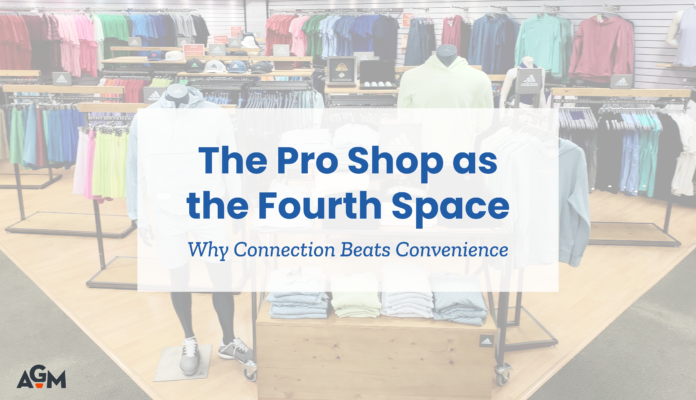
The Pro Shop as the Fourth Space: Why Connection Beats Convenience
Learn how the fourth space concept helps golf shops create memorable experiences that keep members [...]
Aug