

How the best shops decide what not to do — a note for Directors of Golf and GMs
Written by Jennifer Morton, CEO of The Association of Golf Merchandisers
Most Directors of Golf I know are running too many things.
Not because they want to. Because the job has quietly grown. Golf operations, tournament management, member experience, food and beverage liaison, fitness center, junior programs, the wedding inquiry that just came through, the irrigation issue, the staffing call at six. And somewhere down the list — the retail shop. Often handled by someone who is brilliant at it and someone you trust completely. Sometimes handled by someone you inherited. Either way, you approve buying orders you are not entirely sure about, and you know you are leaving money on the table somewhere, but you cannot quite point to where.
At SHOP! Marketplace this spring, I heard a line that I have not been able to stop thinking about. Amber Bazdar, who leads retail visual merchandising at New Balance, shared it in a session called Culture as a Catalyst. She had picked it up from a Harvard Business School professor she had worked with: “Be the worst where it matters least, so you can be the best where it matters most.”
It is a sentence written for people who run too many things. And it is the most honest piece of leadership advice I have heard in a long time.
The trap of trying to be good at everything
When a leader is responsible for many domains, the instinctive response is to be at least passably competent in all of them. Not bad at anything. Not exceptional anywhere. A solid B-minus, everywhere, all the time.
It feels safe. It looks responsible. It also guarantees mediocrity in the one or two areas where your club actually wins or loses. Because a B-minus retail operation is not invisible. Members notice. Guests notice. The numbers notice. And the cost of that quiet underperformance compounds year after year, while the leader stays busy keeping everything at a steady B-minus.
The frame Amber offered, and that her team uses, is the opposite. Pick the two or three things where being excellent matters more than anything else. Be unapologetically excellent there. Then, on purpose, choose to be average or even below average in the areas that do not move the needle. That is the trade-off. There is no avoiding it. The only question is whether you are making it deliberately or by accident.
THE HONEST QUESTION
If your retail operation is currently a B-minus, is that the result of a strategic decision — or a default? If it is a default, who at your club is the right person to make it a B-plus, an A, or to take it off the list entirely?
Most bottlenecks live upstream of the work
The second insight from that session has stuck with me even harder. Amber argued that when teams feel slow or stuck, the natural instinct is to look at the visible work and assume the bottleneck is there. The reality, almost every time, is that the bottleneck is upstream — in unclear ownership, in approvals that do not add value, in decisions that have not been made.
She told the room that she had asked her own leadership team, candidly, whether she was the bottleneck. They told her she was. And she counted it as a gift.
Most retail teams in clubs do not have unclear merchandising skill. They have unclear permission. They are not sure what they can decide and what needs your signature. They are not sure how much latitude they have on markdowns, vendor relationships, new vendors, displays, or seasonal strategy. So they ask. And the asking is the bottleneck.
If retail is one of the areas where your club needs to be excellent, the highest-leverage thing you can do is not to weigh in more often. It is to weigh in less, on purpose, with a shared language for what is decided and what is open.
Amber’s team uses three simple signals: Yes, No, and Safe to try.
- Yes means we are committed. Go.
- No means a decision has been made and we are moving on. Usually for strategic or financial reasons.
- Safe to try means we do not know yet. Prototype it. Test it. Bring back what you learn.
That third signal is the one most retail teams in clubs are missing. “Safe to try” gives your buyer permission to test a new vendor in one display, on one wall, for one season — without a thirty-minute meeting and a written justification. It is also the language that lets your team admit, without fear, when a try did not work. Failure becomes a data point, not a career risk.
Trust is operational infrastructure
Here is the part that surprised me most. Amber argued that trust is not just emotional. It is operational. When trust is high, ownership goes up, decisions move faster, accountability is real, and the team starts seeing the impact of their work — which makes the work feel meaningful, which raises engagement, which feeds back into more ownership.
When trust is low, the response is to add approvals. Add controls. Add process. Each of those looks responsible. Together, they slow everything down and quietly tell the team you do not believe they can be trusted with the decisions in front of them.
In a small operation like a club retail shop, trust shows up in specific ways. The buyer is permitted to make calls without a second signature. The shop manager is allowed to rework a display without approval. The team knows the three or four things you will care about and the dozens you will not. They know what an excellent quarter looks like to you, in their words, not yours.
If your retail team cannot describe what an excellent quarter looks like in their own words, that is the upstream gap. Not their skill. Your clarity.
Strategic trade-offs, applied to the shop
Here is what “be the worst where it matters least” looks like in practice, for a club retail operation.
- Be the worst at being everything to everyone. Stop trying to carry every category. Stop stocking the brands you carry just because you always have. Pick the categories where your club genuinely wins and double down. Let the rest go quietly.
- Be the worst at clearance theater. Stop layering on the discount signage that turns your shop into a department store. Members at a private club did not join the club to bargain hunt. Excellent retailers move through old inventory with precision, not panic.
- Be the worst at filling the shop wall-to-wall. Resist the impulse to maximize square footage. Negative space is the most expensive real estate in your shop because it is what makes the hero merchandise look like a hero. The most impressive shops in our industry are not the most crowded.
- Be the best at the moments that define your club. The Member-Guest welcome. The club championship celebration. The trophy moment after a tournament. The gift for the spouse who waited at home. These are the moments your retail shop is uniquely positioned to own. Pour your team’s energy here.
- Be the best at the experience inside the shop. Lighting, sightlines, the wrap, the goodbye, the follow-up. These compound. They are what members remember when they describe your shop to a friend.
Your one irreplaceable role
If you take only one thing from this piece, take this: in most clubs, the Director of Golf or GM is the only person who can decide whether retail will be one of the areas where the club is excellent. Your buyer cannot make that call alone. Your shop manager cannot. The board cannot make it operational. Only you can.
That decision sets everything downstream. The budget. The hiring. The training. The CRM enrollment. The latitude your team has. The expectation members carry when they walk in. The willingness of your best vendor partners to give you their first call.
Once that decision is made, the rest of your job in retail becomes a different job. Not approving. Not double-checking. Removing friction. Clarifying ownership. Saying “safe to try” more often than “no.” Asking your team what is in their way and then actually getting it out of their way.
THE REFRAME
Your job in retail is not to be the buyer. It is to make sure the people who are can do their best work — with the clarity, permission, and trust required for excellence to be the default instead of the exception.
Where this leaves us
There is a version of running a club where retail stays a B-minus forever, quietly underperforming, absorbing some loss and producing some revenue, never quite a problem and never quite a story the club tells about itself. That version is the default. It is what happens without a decision.
There is also a version where retail becomes one of the two or three things your club is genuinely known for — where members bring guests through the shop before tee time, where vendors call you first, where the shop has a personality and a point of view and a feeling that members can describe in a sentence. That version takes a decision. Yours.
Be the worst where it matters least. Be excellent where it matters most. Decide which is which, out loud, and let your team do the rest.
TRY THIS MONTH
Sit down with your retail lead and ask one question: “What are the three things you would do this season if you knew I would say yes?” Then listen. The answer is your starting point. So is the speed with which they can answer it.
Those who hold Director of Golf or GM roles are invited to learn more about the Certified Retail Manager (CRM) Program — a certification program designed specifically for leaders responsible for club retail operations.
To join a merchandiser community and gain weekly educational opportunities and resources, sign up to become a member of the AGM.
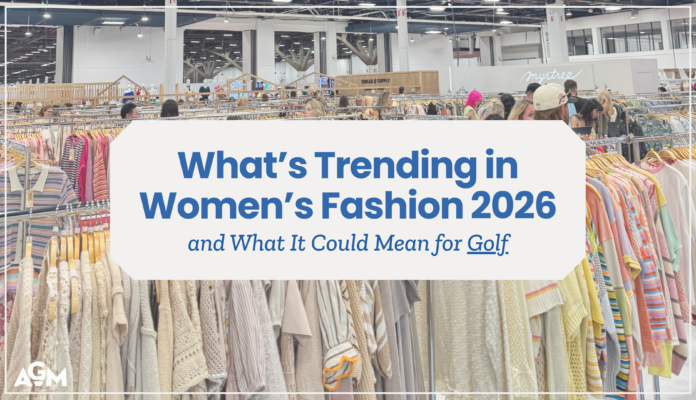
What’s Trending in Women’s Fashion 2026 and What It Could Mean for Golf
Explore Women’s Fashion 2026 trends from MAGIC Las Vegas and see how lace, color, prints [...]
Oct
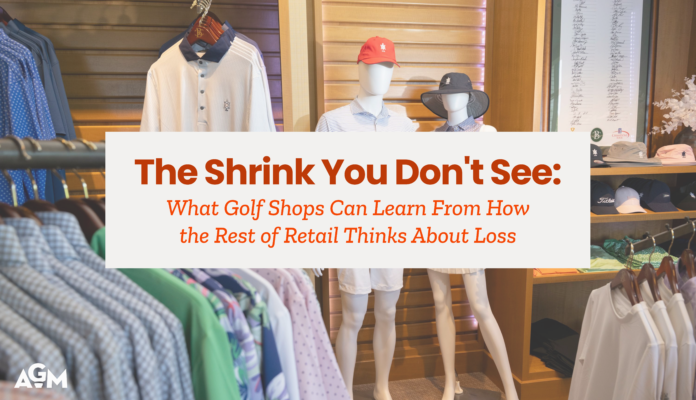
The Shrink You Don’t See: What Golf Shops Can Learn from How the Rest of Retail Thinks About Loss
Shrink is costing golf shops more than theft. See how tighter operations, better habits and [...]
Oct

Tools and Tech Ideas to Improve Your Golf Shop Sales & Engagement
How can tools and tech turn your shop into an experience? Explore practical ideas for [...]
Oct
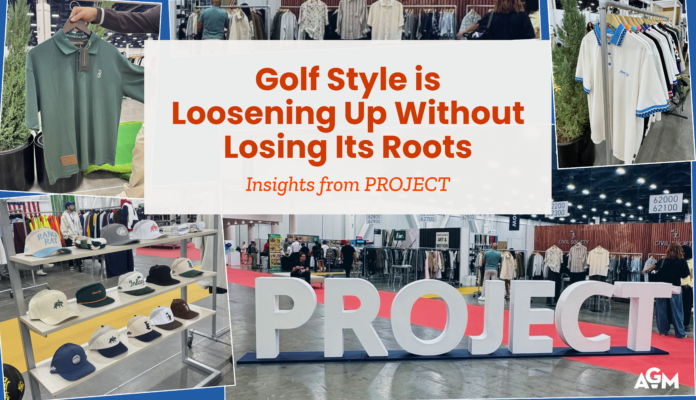
Golf Style is Loosening Up Without Losing Its Roots
Golf style is evolving with bold polos, textures and streetwear influence, helping retailers reach younger [...]
Sep

Registration Is Open for the 2027 AGM Retail Conference
It's official: registration is now open for the 2027 AGM Retail Conference! See what’s ahead [...]
Sep
Mahjong Is Finding a Home at Golf and Country Clubs
Is mahjong on your golf shop radar? Discover why the game is growing at clubs [...]
Sep
What Two Fashion Shows Told Us About Your Next Apparel Order
See what two fashion shows revealed about Spring/Summer 2027 trends and how they can shape [...]
Sep
Football Season in the Golf Shop: Displays, Promotions and Member Engagement Ideas
Bring football season into the golf shop with spirited displays, friendly rivalries, game-day promotions and [...]
Sep