

Written by Katelyn Madsen
For a long time, events have followed the same formula. You show up, set up a booth, put your product on display, and hope the right people walk by. And to be fair, that approach still works to a certain extent. But the culture has been evolving into something more personalized to the consumer.
What’s changing is how people want to engage with brands. For years, everything has been digital. Ads, content, retargeting, more content. It’s constant, and it’s become crowded. So when something shows up that feels like something you can physically step into, it immediately stands out. And more importantly, it gives people something to associate with your brand beyond just the product. And this is where brand activations come into play.
What a Brand Activation Actually Feels Like
At its core, a brand activation is a space designed for people to experience a brand instead of just seeing it. It’s not a table with product laid out or a rack of merchandise. It’s a branded environment that makes you feel like you are stepping into the lifestyle that brand offers, rather than being sold their product. When that feeling lands, people don’t just remember the product, they remember the brand itself. The product is still there, it just shows up naturally, like an organic product placement.
From Pop-Ups to Full Environments
At larger events like Coachella Valley Music and Arts Festival, this idea has grown into something much larger than a pop-up. Brands are building full environments that run for multiple days, designed to host exclusive people (primarily influencers), keep them there, and give them something to do and promote. Some are full homes or villas with production teams, influencer partnerships, branded transportation, and curated gifting moments. It is the epitome of brand extravagance meant to evoke a feeling that people want to be a part of. They are not product-driven, but experience-driven.
Brand Activation Examples from Coachella
At Coachella 2026, many brands stood out. All of which created something people could step into and engage with. Pinterest required guests to lock their phones away, encouraging presence over content. GAP leaned into comfort and identity with its Hoodie House, offering customization and a space that reflected Gen Z streetwear culture. Rhode built an environment that felt like a physical extension of its brand, clean, aesthetic, and naturally shareable. Each activation looked different, but they all prioritized experience, with product showing up more naturally within it. That’s what makes them stick. People remember how it felt (even if they are just experiencing it through a screen), and that feeling becomes tied to the brand.
View this post on Instagram
A Golf Example: Malbon Home 2026
The most prominent example of this in golf right now is ‘Malbon Home’ which was held during the weekend of the Augusta National tournament. Malbon transformed a home, creating a space that didn’t feel like retail at all. It allowed players and patrons a space to take a break, hang out, and just be there for a while. Yes, there was product, but that wasn’t the focus.
There were experiences layered throughout, from cigar rolling and morning Tai Chi to bouquet-making, ice baths, and coveted giveaways. One of the most uniquely memorable aspects though is the “Letters from Augusta” unworking payphone where guests could leave heartfelt messages for loved ones. Because there was no one on the other end of the line, it gave people a rare moment to pause, reflect, and say what was on their heart without consequence. Many thanked parents who had passed, friends who couldn’t be there, and loved ones who were close to them. This seemingly small activation felt human and personal, which in turn built goodwill toward the brand with attendees and those watching it unfold on social media. It gave people something to connect with on a deeper level, which is what turns a moment into long-term brand recognition.
View this post on Instagram
Why This Works and Feels Different
What makes all of this work is actually pretty simple. People are looking for something that feels real. Something they can interact with. Something they can remember. Not everything has to be optimized for a click or a conversion anymore. Sometimes the impact comes from how something felt in the moment. And when people feel something, they remember who made them feel that way.
How to Apply These Ideas at Events
It is important to remember that the examples above are exceptionally large-scale activations with equally large budgets behind them. Most merchandisers are not turning a member event into Malbon Home, and most vendors are not building a Coachella villa at a trade show.
But that does not mean the principles are out of reach.
What made those experiences work was not just the money. It was the thought behind them. They gave people something to step into, something to interact with, and something they wanted to remember. That same mindset can absolutely be applied on a smaller scale at club events, trunk shows, member experiences, and trade show booths.
For Merchandisers: How to Bring This Into Club Events
When merchandisers host events, the opportunity is not just to put product nearby and hope people browse. It is to create a setting that feels welcoming, intentional, and connected to the event itself.
Step 1: Start with the feeling, not the fixture.
Before deciding what products to feature or how the table should look, ask what you want guests to feel. Relaxed? Celebratory? Pampered? Curious? If you begin there, the event becomes more cohesive. A ladies’ shopping night, member-guest event, or holiday open house should feel like more than a retail setup dropped into a room.
Step 2: Build one interactive moment.
This does not need to be elaborate. It could be a charm bar, a handwritten note station, a small customization element, a scent or skincare sampling area, a try-on moment with styled mannequins nearby, or even a simple gifting station where purchases are wrapped beautifully on the spot. The point is to give people something to do, not just something to look at.
Step 3: Tie the product into the experience naturally.
The best event retail does not feel forced. Product should feel like part of the atmosphere, not an interruption to it. If you are hosting a spring event, maybe floral accessories, hosting pieces, or apparel in seasonal color stories are worked into the environment itself. If it is a golf event, perhaps the merchandise supports the mood of the day rather than screaming for attention from a separate table in the corner.
Step 4: Give people a reason to linger.
The longer someone stays, the more likely they are to engage. That could mean comfortable seating, a signature drink, a quick live demonstration, a photo moment, or a small service element. You do not need a huge production. You just need to make the space feel worth staying in.
Step 5: Create one thing people will remember afterward.
This is where many events fall short. They may be nice, but nothing sticks. Think about one detail that makes the event feel specific and memorable, whether that is a takeaway, a thoughtful prompt, a sensory detail, or a personal touch. The goal is not just attendance. It is recall.
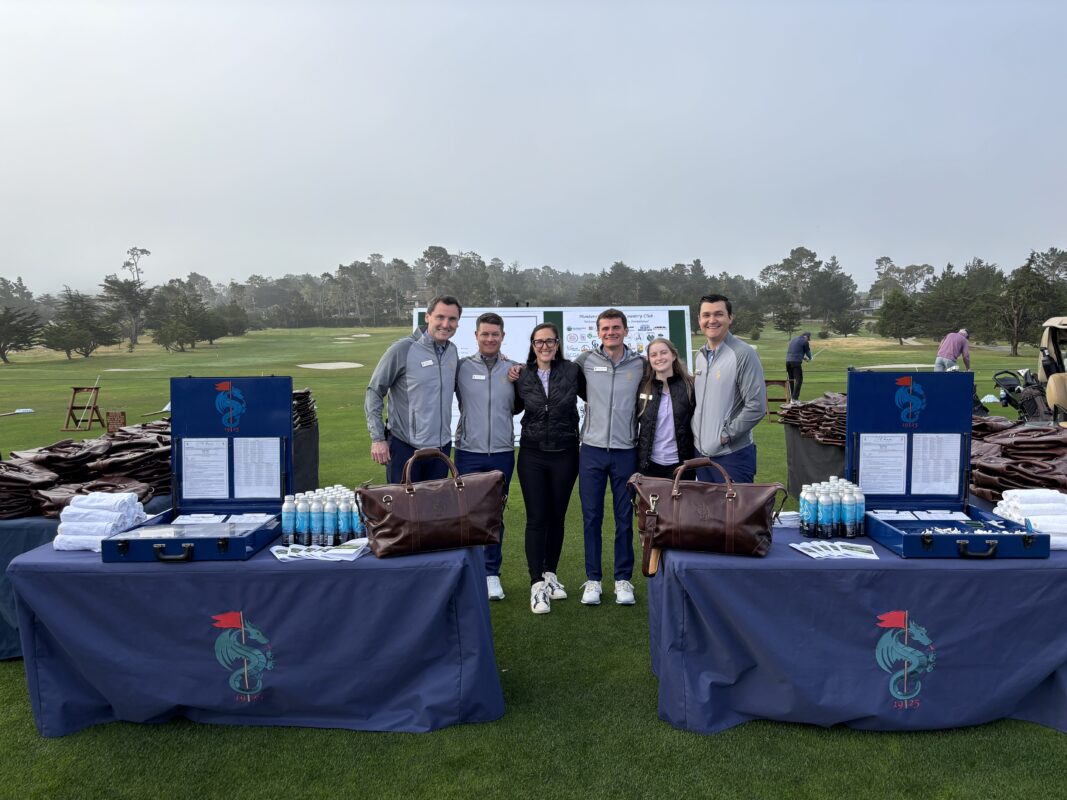
For Vendors: How to Bring This Into Trade Shows
For vendors, the same principles apply, but the setting is different. At a trade show, everyone is trying to be seen. That is exactly why simply showing product is often not enough.
Step 1: Decide what your brand should feel like.
What lifestyle do you want to convey through your products?
Not just who they are on the course, but who they are outside of it. The goal is not to define a golfer. It’s to define a person who happens to play golf.
Is your brand…
- Elevated and refined, for the one who enjoys a slow morning, dresses with intention, meets friends for lunch or wine, and values quality in everything they buy
- If so, keep it clean, minimal, and spacious. Let the product and quality stand on their own.
- Engaging and fun, for the one who hosts friends, travels on weekends, grabs a couple drinks after a long day, and is always looking for something social to do
- If so, go bold, interactive, and energetic. Draw people in and keep them engaged.
- Relaxed and intentional, for the one who prefers a slower pace, spends time outdoors, enjoys simple routines, and values comfort without sacrificing quality
- If so, create a space that feels calm and approachable. Use natural textures, soft merchandising, and an easy flow that invites people to slow down and browse.
Once you can clearly picture that person, translate it into your booth and marketing. People should be able to walk in and immediately understand your brand without needing an explanation.
It’s not just about showing product anymore. It’s about helping people recognize themselves in your brand.
Step 2: Give buyers a reason to step in, not just walk by.
This is where creativity matters. Maybe it is a personalization element, a tactile product test, a styling station, a small hospitality touch, free snacks, or a guided way to interact with the collection. It should feel inviting, not gimmicky. The goal is to lower the barrier to engagement.
Step 3: Make the experience about more than the product rack.
Your product still matters, of course, but the way buyers encounter it matters too. Could your line be merchandised in a more lifestyle-driven way? Could the space tell a clearer story? Could you show buyers how the product would actually live in a shop instead of just lining it up for inspection? That is where booths start to become experiences.
Step 4: Think about what people will photograph, mention, or remember.
Not every booth needs to be flashy, but every booth should have a point of distinction. It might be a beautiful visual moment, a surprising detail, an especially thoughtful takeaway, or just a really strong concept. If nothing stands out, nothing travels beyond the show floor.
Step 5: Support the retailer after the moment is over.
Part of what makes activations effective is that they do not end when someone walks away. For vendors, that means giving buyers tools they can take with them, whether that is a memorable leave-behind, a strong visual packet, easy merchandising ideas, social assets, or event-ready suggestions they can use in their own shops. A good trade show experience should make it easier for a buyer to picture success with your brand.
The Common Thread
Whether you are hosting a member event or showing at a trade show, the question is the same: are you just presenting product, or are you creating a moment around it?
That is the real lesson behind these activations. People are looking for something engaging, thoughtful, and personal. They want to feel something. And while not every event needs to be extravagant, every event can be more intentional.
The Shift Is Already Happening
Everything moves in cycles, and right now, attention is shifting back to the real world. The brands that stand out won’t just be the ones people see online. They’ll be the ones people remember how they felt around.
Take a look at your next event and ask yourself: are you just showing product, or are you creating something people will remember?
To join a merchandiser community and gain weekly educational opportunities and resources, sign up to become a member of the AGM.
Tools and Tech Ideas to Improve Your Golf Shop Sales & Engagement
How can tools and tech turn your shop into an experience? Explore practical ideas for [...]
Oct
Golf Style is Loosening Up Without Losing Its Roots
Golf style is evolving with bold polos, textures and streetwear influence, helping retailers reach younger [...]
Sep
Registration Is Open for the 2027 AGM Retail Conference
It's official: registration is now open for the 2027 AGM Retail Conference! See what’s ahead [...]
Sep
Mahjong Is Finding a Home at Golf and Country Clubs
Is mahjong on your golf shop radar? Discover why the game is growing at clubs [...]
Sep
What Two Fashion Shows Told Us About Your Next Apparel Order
See what two fashion shows revealed about Spring/Summer 2027 trends and how they can shape [...]
Sep
Football Season in the Golf Shop: Displays, Promotions and Member Engagement Ideas
Bring football season into the golf shop with spirited displays, friendly rivalries, game-day promotions and [...]
Sep
Grandparents Day in the Golf Shop: Easy Ways to Celebrate
From gift displays and personalization to promotions, cards, and treats, discover how your golf shop [...]
Sep
Year-End Returns: An Inventory Tool, Not an Exit Strategy
Are freight, restocking fees, paperwork, and time really worth the return? Rethink inventory and discover [...]
Aug