

By Jennifer Morton, CEO of The Association of Golf Merchandisers
Most of us landed in golf retail because we love it. The product, the people, the rhythm of a good selling season. Not because someone sat us down and walked us through how to build a compensation plan.
Then one day, you are the one deciding.
What should we pay a new buyer? Should this position include a bonus? How much? Should everyone share in the same incentive, or should different roles be rewarded differently? And what happens when you bring in a consultant to help with a specific project?
Suddenly, you realize no one ever showed you how any of this actually works.
Members ask me about compensation all the time. So let’s talk about it plainly, the way I wish someone had talked me through it years ago.
Start with the three building blocks
Most compensation plans include some combination of three things.
Base pay is the steady paycheck. It is what someone can count on, and it should reflect the market for their role, their experience, and where they are located. This is your foundation. Get it wrong, and no bonus in the world is going to completely fix it.
Commission is typically tied directly to what someone sells. It rewards the sale itself, which makes it powerful but also a little blunt. Commission works best when the person genuinely drives the sale and has meaningful control over the result.
Bonus is a reward for reaching a goal established ahead of time. Unlike commission, a bonus can be tied to almost anything you care about: sales growth, gross margin, inventory turn, customer experience, or another measurable objective.
Most good plans blend these thoughtfully: a steady base, plus an incentive that points people toward what matters most to your operation.
Match the reward to the lever they hold
The problem with an incentive plan is often not the size of the bonus. It is what the bonus is tied to.
Picture a buyer whose bonus is tied to gross margin. She builds a smart, disciplined buy, and her margins look strong heading into the season. Then the facility decides to run an aggressive club-wide markdown to clear space or drive traffic — a call she had no part in making. Her margin number falls, and her bonus with it, for a decision that was never hers. She did everything right and still missed the goal.
That is frustrating for the employee, and it quietly undermines the incentive itself.
Or take it the other way. If you reward a salesperson on net profit, you may be handing them a number shaped by payroll, freight, occupancy costs, markdown decisions, and a dozen other things they cannot touch. They can work harder, sell more, and do everything you ask — and the number still moves without them.
So before you set the target, ask a simple question: What can this person actually influence?
A sales associate can influence individual or team sales, units per transaction, and add-on sales. A buyer can influence gross margin, inventory turn, and markdown performance within their own buy. A director of retail may influence the performance of the entire operation. The closer you can connect the reward to the lever someone actually holds, the more effective the incentive becomes.
That does not mean every incentive needs to be individual.
Golf retail is a team sport. In some shops, individual commissions can quietly create competition between people when what you really want is collaboration. If everyone contributes to the customer experience and the overall success of the shop, a team-based bonus may make more sense. In other cases, an individual incentive is right, because that person’s contribution can be clearly and fairly measured. There is no single correct structure. The real question is whether the plan reinforces the behavior — and the culture — you actually want.
A few rules worth remembering
Define the starting line. A bonus for “growth” means very little until you name the number you are growing from and the period you are measuring.
Put it in writing before the season starts. A plan explained or changed on the fly is a plan you are likely to argue about later.
Decide how success will be measured. Everyone should understand what data will be used, when the measurement period ends, and who makes the final call.
And perhaps most importantly, do not move the goalposts. If your team hits the target you gave them, celebrate it and pay them accordingly. You can always build a better target next year.
What about consultants?
More golf retail operations are bringing in outside expertise for specific projects, strategic initiatives, or ongoing support. A consulting agreement is different from an employee compensation plan, though some of the same principles apply.
Consultants may be paid an hourly rate, a flat project fee, or an ongoing monthly retainer. In some engagements, it can also make sense to add a performance-based component. A success fee pays when a specific, agreed-upon result is achieved. A performance fee increases based on measurable results, such as reaching certain milestones or levels of improvement. A shared-savings or shared-value model gives the consultant an agreed-upon portion of the measurable savings or incremental value created.
None of these structures is automatically better than another. The right one depends on the work.
If you do include a performance incentive, make it meaningful relative to the overall engagement, and tie it to an outcome the consultant can reasonably influence. Just as you would with an employee, establish the baseline, the measurement period, and the definition of success before the work begins.
And remember that a consultant is not simply an employee with a different pay structure. Worker classification and contract terms carry legal and tax implications, so those specifics belong in a conversation with your attorney or accountant.
Let your own numbers guide you
One of the quiet advantages of being part of the AGM is that you do not have to negotiate compensation in the dark.
Every year, our Membership Study gives us a real, industry-specific picture of what golf retail actually pays — base salary broken down by role, how many members earn a bonus or commission on top of their salary, and how those incentives are structured. That is the kind of benchmark you cannot get by guessing, or by borrowing a number from a shop down the road that operates nothing like yours.
I will tell you this much: the spread by role is wider than most people expect, and incentives are more common than many members assume. The specific numbers, though, are for our members. They are one of the real reasons people join.
Because a benchmark is only ever a starting point. Geography matters. Facility size matters. Scope of responsibility matters. Experience matters. The realities of your own operation matter. But walking into that conversation with real data, instead of a hunch, changes everything.
The bottom line
Paying people well is one of the most important things we do as leaders, and it is one of the few things many of us were never formally taught how to do.
Start with a fair base. Understand what the person can actually influence. Build an incentive around the outcomes that matter. Decide whether you want to reward individual achievement, team success, or some combination of both. Then define it. Write it down. Measure it honestly. And if your team delivers what you asked of them, reward them for it.
Do that well, and compensation stops being just a number on a paycheck. It becomes one more way you show your team what — and who — you value.
AGM members can access the full 2025 Membership Study, including the complete compensation benchmarks, in the members-only section of our website. If you are not a member yet, this is exactly the kind of thing membership is for.
To join a merchandiser community and gain weekly educational opportunities and resources, sign up to become a member of the AGM.
The Overlooked Power of Signage in Golf Retail
Could your golf shop be losing out on sales? Discover how signage in golf retail [...]
Oct

Behind the Curtain at Antigua
Go behind the scenes on an Antigua Factory Tour as AGM members discover the craftsmanship [...]
Oct
Building a Golf Shop Culture People Want to Be Part Of
What makes a great golf shop team? Discover how everyday leadership moments build stronger teams [...]
Oct

What’s Trending in Women’s Fashion 2026 and What It Could Mean for Golf
Explore Women’s Fashion 2026 trends from MAGIC Las Vegas and see how lace, color, prints [...]
Oct
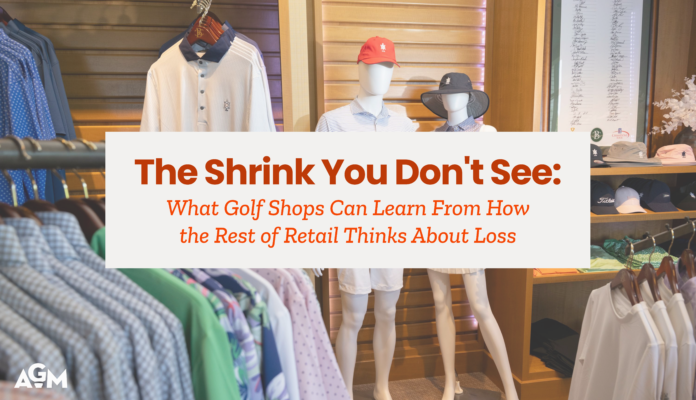
The Shrink You Don’t See: What Golf Shops Can Learn from How the Rest of Retail Thinks About Loss
Shrink is costing golf shops more than theft. See how tighter operations, better habits and [...]
Oct

Tools and Tech Ideas to Improve Your Golf Shop Sales & Engagement
How can tools and tech turn your shop into an experience? Explore practical ideas for [...]
Oct
Golf Style is Loosening Up Without Losing Its Roots
Golf style is evolving with bold polos, textures and streetwear influence, helping retailers reach younger [...]
Sep
Registration Is Open for the 2027 AGM Retail Conference
It's official: registration is now open for the 2027 AGM Retail Conference! See what’s ahead [...]
Sep