

Written by Ken Morton Jr.
The recent annual conference hosted by the Shop! Association in New Orleans was a fascinating reminder that the future of retail is no longer simply about what we sell — it is increasingly about how customers experience what we sell. Shop! brings together some of the brightest minds in retail design, visual merchandising, experiential marketing, shopper engagement, and in-store technology. While the conference spans every category from grocery to luxury goods, many of the concepts shared have immediate and direct applications for golf retail professionals looking to stay relevant in an increasingly competitive and digitally influenced marketplace.
One educational session in particular stood out.
“From Insights to Impact – Designing Retail Displays That Shoppers Notice,” presented by Bridget Bacon, delivered a series of compelling shopper behavior statistics that should make every golf merchandiser stop and think. Bacon works with Mondelez International, one of the world’s largest snack companies and the parent company behind globally recognized brands such as Oreo, Ritz, Chips Ahoy!, Cadbury, Sour Patch Kids, Triscuit, Wheat Thins, and Toblerone. Mondelez operates in more than 150 countries and is deeply invested in understanding how consumers shop, what captures attention, and what ultimately drives purchasing behavior.
While much of the presentation centered around consumer-packaged goods, the behavioral insights translate remarkably well into golf retail. Here are several metrics shared during the presentation that deserve serious consideration from golf shop merchandisers everywhere:
50% of purchase decisions are open to being influenced in-store or online
This is one of the most important reminders for golf retail. Customers may walk in thinking they know what they want, but merchandising, storytelling, displays, staff engagement, and experiential retail all still matter tremendously. The battle is far from over once a golfer walks through the door.
54% of all snacking purchases are made from effective POP (Point of Purchase) displays
Golf shops often underutilize impulse merchandising. Counter displays, fitting accessories, logo merchandise, gloves, hats, ball markers, sunscreen, snacks, and travel accessories can all benefit from stronger POP placement.
74% of people have now bought groceries online
Consumers are fully conditioned to omnichannel shopping behavior. Golf shops must think beyond the four walls of the store and create consistency between physical retail, email marketing, social media, and e-commerce.
71% of people make regular purchases on their smartphone
Your website, emails, and promotions must be mobile optimized. If your online storefront is difficult to navigate on a phone, you are likely losing business daily.
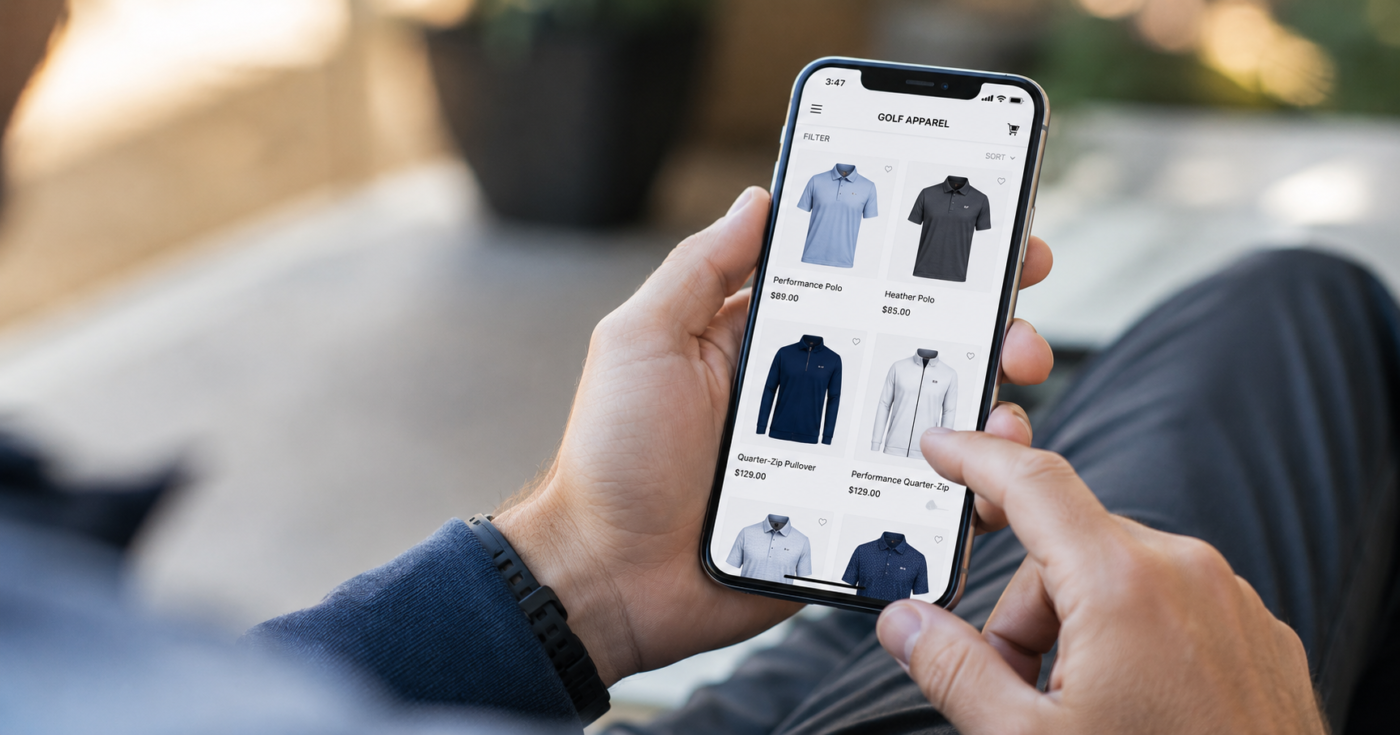
62% use social media to discover new products
Golf shops can no longer rely solely on vendor marketing. Instagram reels, TikTok content, Facebook videos, YouTube shorts, and authentic behind-the-scenes product education all help customers discover merchandise organically.
67% define value as what you get, not what you pay
This is especially important in golf retail where premium price points continue to rise. Consumers are willing to spend — but they must clearly understand the performance, technology, quality, exclusivity, service, or experience attached to the item.
97% of people use social media as their top source of retail shopping inspiration
That number is staggering. Golf shops should think of social platforms as digital visual merchandising windows. Your store’s social feed is often your first display case.
64% of customers want brands to provide more experience
This reinforces why experiential retail continues to grow in importance. Demo days, launch events, ball fittings, simulator contests, apparel trunk shows, putting contests, junior golf experiences, ladies nights, bourbon tastings, live music events, and interactive product displays all help differentiate green grass retail from online competition.
71% use a smartphone in their shopping journey, with 87% of Gen Z and Millennials doing so regularly
Today’s shopper often researches products while standing inside your store. Purchases are not made in a bubble. Reviews, pricing comparisons, YouTube videos, and social proof are part of the modern purchase journey. Golf retailers should embrace this behavior rather than fear it.
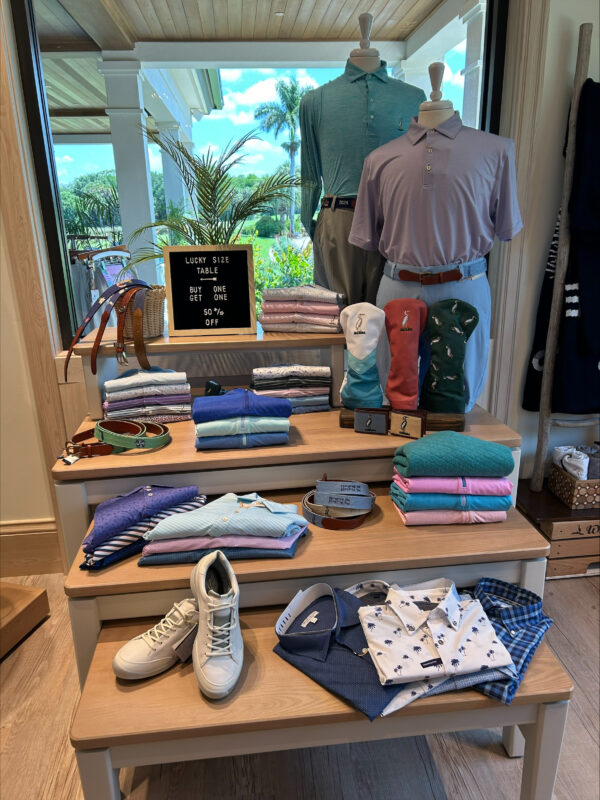
64% say discounts speed up their shopping decision
Strategic promotions still matter. The key is thoughtful execution rather than endless markdowns. Bounce-back offers, bundled promotions, loyalty rewards, and limited-time urgency can all be highly effective.
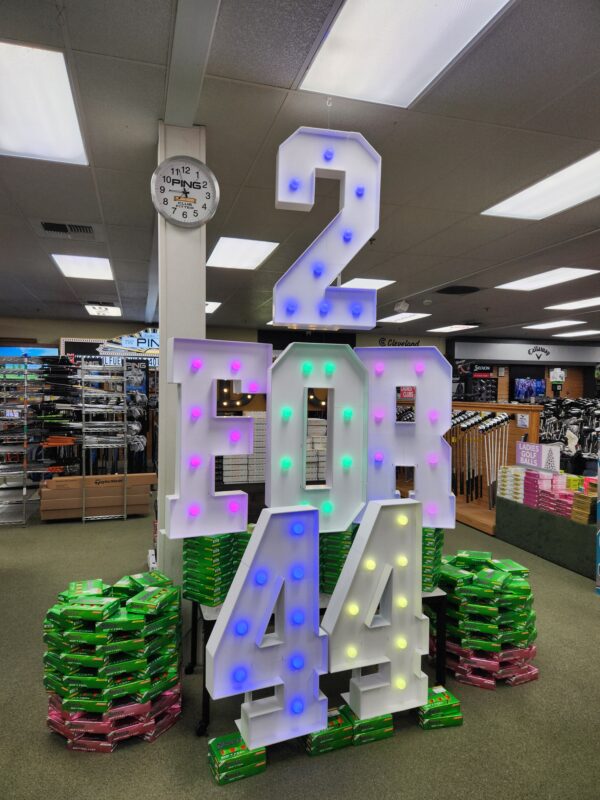
60% say shopping gamification increases their purchase likelihood
Golf retail is uniquely positioned for this. Spin-to-win promotions, scavenger hunts, simulator challenges, loyalty badges, putting contests, and “buy-and-unlock” promotional structures all create engagement.
43% of shoppers bought more than they had planned when tied to an experience
Experiential retail is not just entertaining — it drives higher transaction values. The more memorable the shopping environment becomes, the more customers tend to emotionally engage with purchases.
3 seconds — consumers must understand a display or attention moves elsewhere
This may have been the single most important visual merchandising lesson of the session. Customers process displays incredibly quickly. Clean presentation, clear signage, strong focal points, and simplified messaging are critical.
50% bought more than planned with experiential displays because they have stopping power
Displays must interrupt traffic flow and create curiosity. If customers simply walk by without pausing, the display likely is not working.
58% of people bought more when the experience was personalized
Golf retail thrives when it feels personal. Occasion-based merchandising, tournament-themed displays, women’s golf activations, member events, local pride merchandise, junior golf tie-ins, and seasonal storytelling all create emotional relevance.
Purchase likelihood increases 16% when consumers search through AI/LLM tools versus traditional search engines
This is a major emerging trend. Customers are beginning to trust AI-assisted recommendations for products, travel, restaurants, and retail decisions. Golf shops should begin thinking about how their content, blogs, FAQs, and online presence position them to appear in AI-driven discovery.
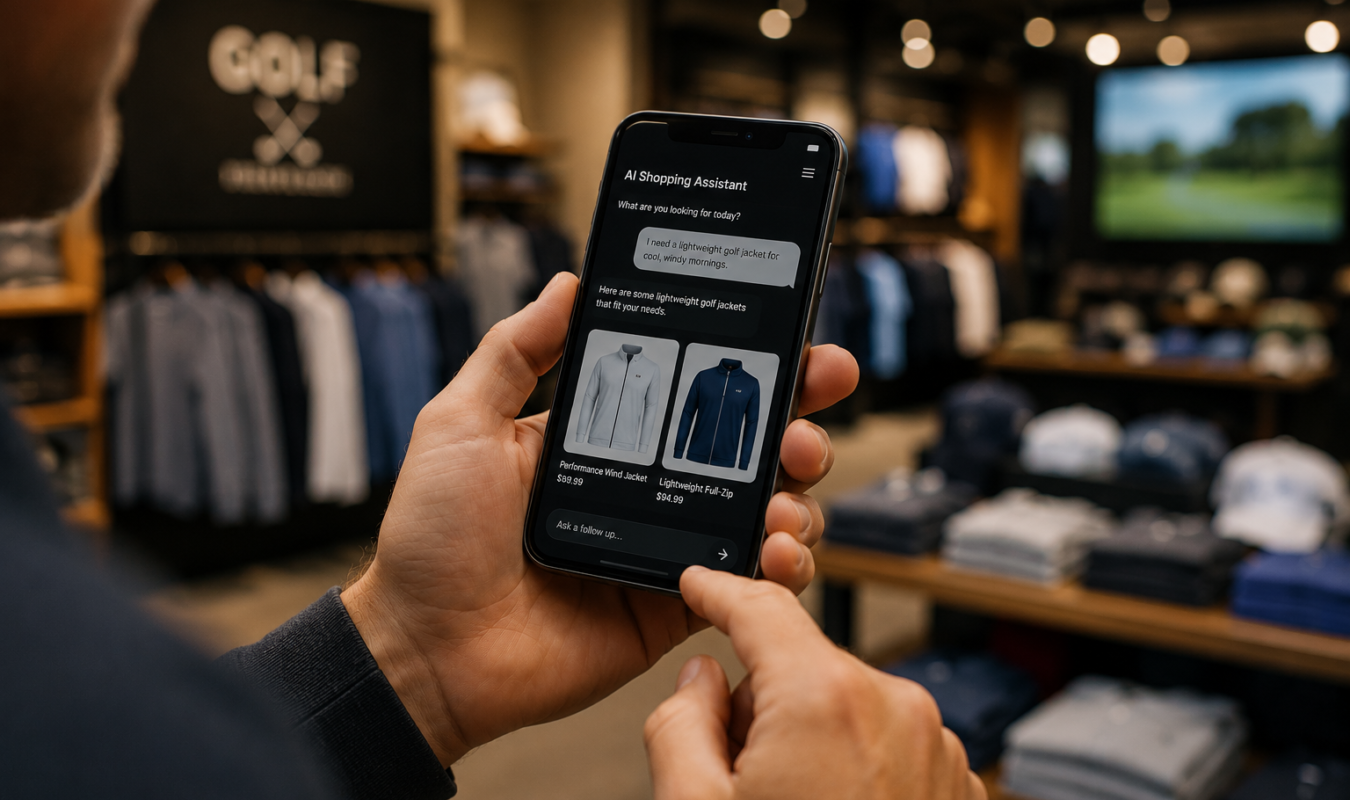
70% of consumers have purchased products recommended by AI
Recommendation engines are becoming mainstream. Personalized product suggestions online and in-store will continue growing in importance.
58% have replaced some traditional search behavior with AI search
This should be a wake-up call for retailers investing heavily in traditional SEO alone. AI visibility and conversational content may become equally important moving forward.
A scanned QR code in a display increases conversion by 50%
QR codes remain dramatically underutilized in golf retail. They can connect customers directly to fitting videos, inventory availability, instructional content, online reviews, launch videos, event registration pages, or even instant purchases.
The Overarching Lesson
For golf merchandisers, the overarching lesson from the Shop! conference was clear: the future of retail belongs to stores that blend merchandising, storytelling, technology, personalization, and experience into a seamless customer journey. Golf retail has an advantage many other retail categories do not — our stores are naturally experiential. Golfers want to test products, interact with experts, compare technologies, participate in events, and immerse themselves in the game they love. The challenge for all of us moving forward is designing environments and experiences that stop shoppers in their tracks long enough to matter.
In an era where customers can buy almost anything online in seconds, the real competitive advantage may no longer be inventory itself. It may simply be creating something memorable enough that customers want to come back and experience it again.
To join a merchandiser community and gain weekly educational opportunities and resources, sign up to become a member of the AGM.
The Overlooked Power of Signage in Golf Retail
Could your golf shop be losing out on sales? Discover how signage in golf retail [...]
Oct
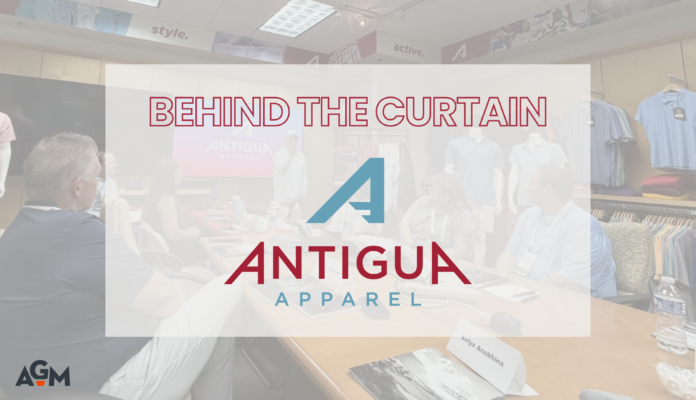
Behind the Curtain at Antigua
Go behind the scenes on an Antigua Factory Tour as AGM members discover the craftsmanship [...]
Oct
Building a Golf Shop Culture People Want to Be Part Of
What makes a great golf shop team? Discover how everyday leadership moments build stronger teams [...]
Oct
What’s Trending in Women’s Fashion 2026 and What It Could Mean for Golf
Explore Women’s Fashion 2026 trends from MAGIC Las Vegas and see how lace, color, prints [...]
Oct
The Shrink You Don’t See: What Golf Shops Can Learn from How the Rest of Retail Thinks About Loss
Shrink is costing golf shops more than theft. See how tighter operations, better habits and [...]
Oct

Tools and Tech Ideas to Improve Your Golf Shop Sales & Engagement
How can tools and tech turn your shop into an experience? Explore practical ideas for [...]
Oct
Golf Style is Loosening Up Without Losing Its Roots
Golf style is evolving with bold polos, textures and streetwear influence, helping retailers reach younger [...]
Sep

Registration Is Open for the 2027 AGM Retail Conference
It's official: registration is now open for the 2027 AGM Retail Conference! See what’s ahead [...]
Sep