

Written by Jennifer Morton, CEO of Association of Golf Merchandisers
There is a moment every season when you walk into your shop, look around, and realize you have stopped seeing it.
Not because anything is wrong. The opposite, actually. Because everything has been the same for so long that your eyes have learned to glide past it. The shelf that has been a little crooked since spring. The display that has not been touched since Mother’s Day. The lightbulb that has been out long enough that nobody mentions it anymore. You are not failing to see these things. You have simply gone shop-blind.
Members are not shop-blind. They notice. They just rarely say so.
The most useful exercise I know in retail is the mid-season walk-through — a slow, deliberate tour of your shop done with fresh eyes, on purpose, while the season is still in front of you and there is time to act on what you find.
What follows is a guided version of that walk. It is built from frameworks I picked up at SHOP! Marketplace this spring — the three-second rule, the kit-of-parts approach to brand expression, the fourth-space idea — plus thirty-some years of standing in golf shops and noticing what regular eyes stop noticing.
Do it once this month. Take a notebook. Allow forty-five minutes. Walk it alone the first time then walk it again with someone who has never been in your shop before. The gap between their reactions and your assumptions is where your opportunity lives.
Stop 1 – The Parking Lot
Start where members start. Not at the front door.
Stand in the parking lot for a minute before you go in. Look at what a member sees while they are still in their car. The exterior signage. The condition of the entry. The planters. The glass on the front doors. The way the light falls on the walkway in the morning, or fails to in the evening. The member’s experience of your shop began the moment they parked. They have already made small judgments about what is inside before they have set foot in it.
Things to notice:
- First impression cleanliness. Trash, cigarette butts, dust on the door handles, smudges on the glass
- Entry signage. Is it current? Is it professional? Is it inviting? Is anything still promoting an event that already happened?
- The threshold. What does a member see in the first two steps inside? Is it a hero feature – or a checkout counter, a sale rack, the bathroom hallway?
Stop 2 – The First Three Seconds
Stand fifteen feet inside the entrance. Look at your first display. Time three seconds. Look away.
In one sentence, what did the display tell you to do? If you cannot answer, your member could not either. This is the single highest-leverage display in your shop – the one the golfer sees before they have committed to looking around – and it should be doing exactly one job, beautifully.
Things to notice:
- The hero. Is one product, one story, or one moment leading the display – or is everything competing for the same square inch of attention?
- The price. Is it visible without bending, squinting, or asking?
- The call to action. A card, a story, a sign, a recommendation – anything that gives the member a reason to lean in.
- The season. Does this display look like the right month? Right week? Right intent?
Stop 3 – The Beige Test
Now keep walking. Slowly. Pretend every logo, name, and crest in the shop has been removed. Look only at the color, the materials, the lighting, the fixtures, the layout. Could a member tell whose clubs they were in?
If the honest answer is “not really,” you have a personality opportunity. Your club is somewhere specific. Your shop should feel like it.
Things to notice:
- Color. Where does your club’s signature color show up, on purpose? Where could it?
- Signature material. Is there one material that says “this is us” – wood, leather, stone, brass, linen – used consistently?
- Story moments. Where is the history of the club showing up in the shop? Trophies, photos, vintage scorecards, art commissioned by a member?
Stop 4 – The Lingering Spots
Now stop walking. Stand still and watch your shop in your head. Where do members naturally pause? Where do they congregate? Where do they read a tag, hold a piece against themselves, talk to a friend? These are your gravity points — the locations where attention is already concentrated.
And where do they not pause? Which corner is dead air? Which wall do they walk past without slowing down? Which fixture has not earned a second look in months?
Things to notice:
- Where are the eye lands. Lighting, height, color, and movement pull the eye. If a section is dark, low, neutral, and static — of course members walk past it.
- Where the hand lands. Counters at the right height. Texture members can touch. A bowl, a stack, a fold. The hand follows the eye.
- Where there is nothing to do. If a member has nothing to look at, nothing to touch, and nowhere to pause, they will walk through the shop — not into it.
Stop 5 – The Fitting and Service Zones
Go into the fitting area. Sit down. Look up at the ceiling. Look at the lighting. Look at the mirror. Look at the floor. This is the space where a member becomes a customer or doesn’t — and it is too often the most neglected room in the shop.
Things to notice:
- The lighting. Does it make the member look like themselves, or like a hospital patient? Warm lighting on the face is the most generous gift you can give a member who is trying something on.
- The mirror. Is it clean? At the right height? Is there a full-length option?
- The pause. Is there a seat? A hook? A small table to put a bag on? Or is the member juggling everything alone?
- The exit. When they walk out, what do they see? A staff member ready to help? Or a wall of clearance signage?
Stop 6 – Checkout, The Last Moment
Stand behind the counter. Look at what your team sees, all day, every day.
Then walk to the other side and look at what the member sees in the last 60 seconds of their visit. This is the moment that lands hardest — the one they carry with them out the door. It is also, in many shops, the moment that gets the least design attention.
Things to notice:
- Clutter. Receipt papers, pens, sticky notes, vendor flyers, old coffee cups. The counter is a stage. Treat it like one.
- Eye level. Is the impulse buy area working? Is it curated, or is it whatever did not sell elsewhere?
- The bag, the wrap, the goodbye. Is the gift wrap careful? Is the bag worth keeping? Is the goodbye warm and unhurried, or rushed?
- The follow-up. Does anything happen after the sale — a handwritten note, an email, a thank-you — that turns the transaction into a relationship?
Stop 7 – The Look Back
Walk back to the entrance. Turn around. Look at the shop one more time from where the member first saw it.
Now ask yourself one question. If a member walked in right now with no intention of buying anything, would they have a reason to stay for fifteen minutes? If the honest answer is no, that is the most important thing you will notice all day.
THE REFRAME
The shop is not just where merchandise lives. It is the most expressive room in the club — the one that says, in fixtures and texture and ritual, who you are and who you are for. Members feel the difference even when they cannot name it.
What to do with what you noticed
You will leave this walk with a list. It will be longer than you want it to be. That is normal. Do not try to fix everything before next week.
Pick three. The three highest-leverage moves. One operational fix — the light, the bag, the cluttered corner. One personality move — a color, a story moment, a material. One belonging move — a place to sit, a reason to linger, a follow-up that turns a transaction into a relationship.
Three changes, before the next big weekend on the calendar. That is enough. Personality compounds.
TRY THIS SEASON
Schedule the next walk-through now. Put it on the calendar for the same week each season. The shops that stay sharp are the shops that walk themselves on purpose, on a schedule, before anyone else has to.
To join a merchandiser community and gain weekly educational opportunities and resources, sign up to become a member of the AGM.
The Overlooked Power of Signage in Golf Retail
Could your golf shop be losing out on sales? Discover how signage in golf retail [...]
Oct
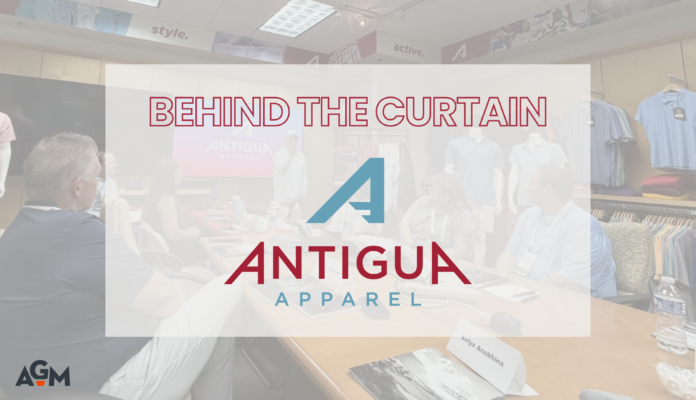
Behind the Curtain at Antigua
Go behind the scenes on an Antigua Factory Tour as AGM members discover the craftsmanship [...]
Oct

Building a Golf Shop Culture People Want to Be Part Of
What makes a great golf shop team? Discover how everyday leadership moments build stronger teams [...]
Oct

What’s Trending in Women’s Fashion 2026 and What It Could Mean for Golf
Explore Women’s Fashion 2026 trends from MAGIC Las Vegas and see how lace, color, prints [...]
Oct

The Shrink You Don’t See: What Golf Shops Can Learn from How the Rest of Retail Thinks About Loss
Shrink is costing golf shops more than theft. See how tighter operations, better habits and [...]
Oct

Tools and Tech Ideas to Improve Your Golf Shop Sales & Engagement
How can tools and tech turn your shop into an experience? Explore practical ideas for [...]
Oct

Golf Style is Loosening Up Without Losing Its Roots
Golf style is evolving with bold polos, textures and streetwear influence, helping retailers reach younger [...]
Sep

Registration Is Open for the 2027 AGM Retail Conference
It's official: registration is now open for the 2027 AGM Retail Conference! See what’s ahead [...]
Sep