

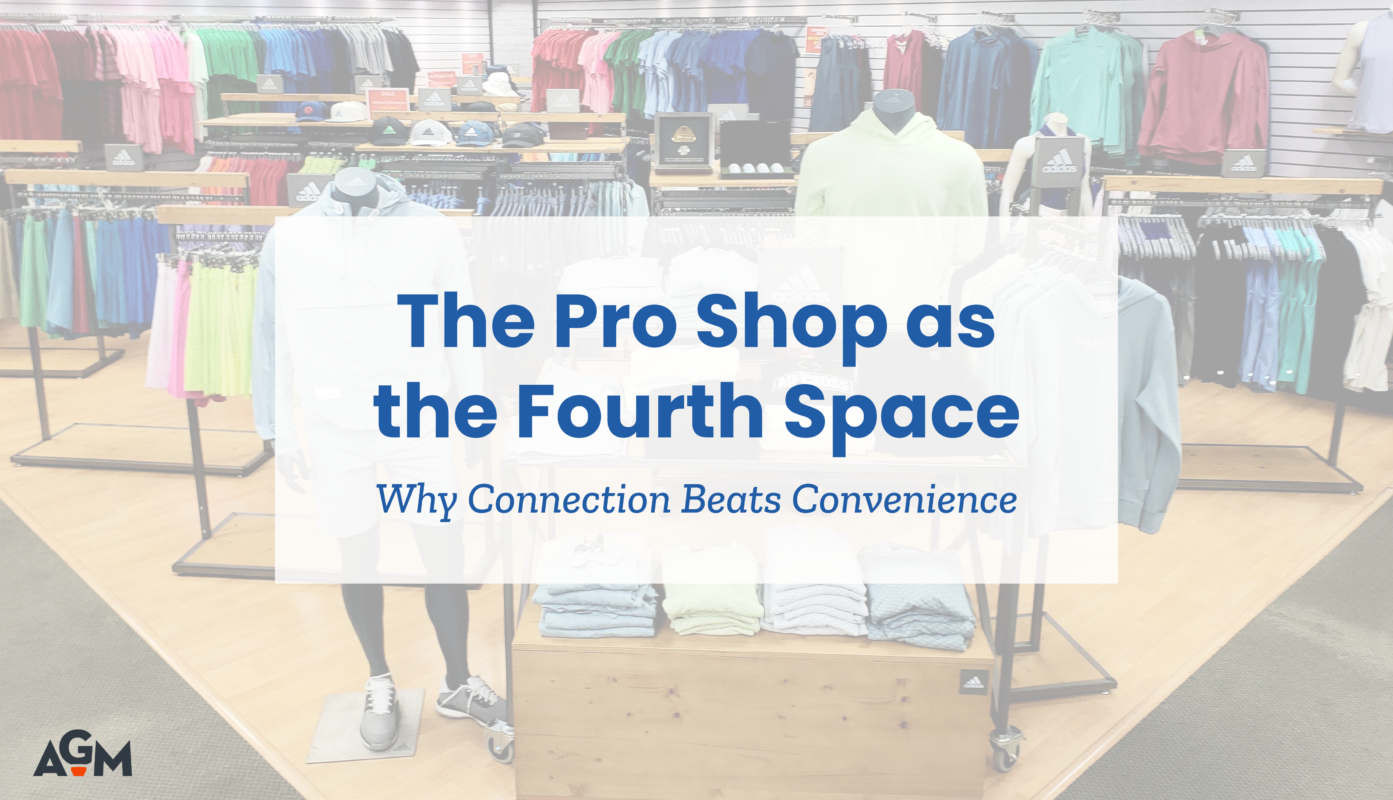
Written by Jennifer Morton | SHOP! Marketplace 2026 Series Part 3 of 3
The most important sale in your shop isn’t on the rack.
It is the member who walked in just to say hello. The guest who lingered at the trophy wall. The husband who came back from the range and stayed for fifteen minutes longer than he meant to. The visitor who took a photo of your entry and texted it to a friend. None of them bought a thing. All of them came back.
At SHOP! Marketplace this year, the closing session was given by a neuropsychologist named Carlotta Dove. She did not show one fixture, one display, or one merchandising trick. She made one argument: in a world that has become too convenient, too automated, too digital, the brands that will win are the ones that design for humanity. For purposeful friction. For belonging.
I have been turning that talk over in my head for weeks. Because every word of it applied directly to what the best pro shops have always quietly done, and what the rest of us could be doing on purpose.
Humanity — the analog craving
Carlotta opened with a number that stopped the room: 72% of consumers now actively crave analog rituals that anchor them to the present moment. Even more striking, nearly half of Gen Z — the generation born with phones in hand — are seeking out experiences from a time before the internet.
Think about what that means for your shop. A generation that grew up swiping is walking into your space wanting something they cannot get on a screen. Texture. Craftsmanship. The feel of leather. The smell of cedar. The conversation with someone who actually knows their game. The hand-tied ribbon on a gift box. The dimensional weight of a real catalog instead of a digital lookbook.
THE OPPORTUNITY
Every digital convenience your member has access to elsewhere is a reason for your pro shop to feel more human, not less. Texture, craftsmanship, conversation, ritual — these are not nostalgic. They are now differentiators.
Here is the practical translation. Five ways to layer humanity into a shop:
- A signature ritual. Something that happens the same way, every time, that members come to expect. A handwritten note tucked into every gift wrap. A complimentary hand-stitched repair tag on a returning customer’s bag. A quarterly hand-poured candle scented to the season.
- A craftsperson on the floor. Embroidery, customization, gripping, fitting — done in view, by hand, by a human. Watching skill happen pulls people in. The session noted that brands like Tecovas have replaced the title “shop assistant” with “host” for exactly this reason.
- Materials that earn touch. Wood, leather, brass, linen, stone. One signature material that members run a hand across without thinking. The opposite of plastic and laminate.
- A story, told slowly. A framed photograph with a member’s actual handwritten caption. A trophy with a one-paragraph card. A vintage scorecard with the date hand-noted. Stories told the slow way carry weight that printed signage does not.
- Imperfection. Not everything has to be sharp, automated, and flawless. A hand-painted chalkboard. A slightly-too-low arrangement of greenery. A handwritten sign. Members read imperfection as authenticity. They read perfection as a chain.
Friction — the convenience paradox
This was the section that genuinely surprised me. Carlotta argued that hyper-convenience has dulled us. Our dopamine pathways have flattened from a decade of frictionless everything. We are not more fulfilled. We are overstimulated and bored at the same time.
Her data point: 62% of consumers say playful discovery is their primary reason for visiting retail spaces. Not price. Not selection. Discovery. The chance to find something they didn’t know they were looking for. The small effort of looking. The small reward of finding.
If you’ve ever wondered why your members spend more time in a vintage shop than a department store — even when they end up buying nothing — that is the answer. The hunt is the point.
THE REFRAME
Not every part of your shop should be frictionless. The shops your members talk about are not the most efficient — they are the most interesting to walk through.
Friction in the pro shop, done with intent, looks like:
- A path of discovery. A layout that does not give everything away at the entrance. One feature visible from the door, but the rest revealed by walking. The Gentle Monster store in Shanghai got cited at SHOP! for doing exactly this — disrupting the path to purchase, making shoppers find the items themselves. Dwell time went up. So did the storytelling.
- A hidden corner. One small, deliberately tucked-away section. New arrivals. The week’s curated pick. A members-only shelf. Something members have to walk past three displays to find. They will.
- A change worth noticing. A vignette that rotates weekly. A window that updates monthly. A wall that swaps seasonally. Friction is not just spatial — it is also temporal. If the shop is the same on Tuesday as it was on Sunday, there is nothing to discover.
- A reason to ask. Curate a product that is intriguing but not self-explanatory. Members ask. Staff get to share the story. A two-minute conversation gets layered into a transaction that would otherwise have been silent.
- A reward for the regular. Something only the members who pay close attention will notice. A small inscription. A hidden detail. A piece that changes. Members love being in on something.
Note the word “intent.” Friction without purpose is bad design. Friction with purpose is the difference between a shop that members walk through and a shop they walk into.
Belonging — the rise of the fourth space
The third space is the social ground between home and work — the park, the library, the church, the coffee shop. Places where people gather without immediate pressure to transact. Carlotta’s argument, backed by research she cited: third spaces are eroding. 95% of Americans believe public spaces no longer meet their community needs. People have, on average, three extra hours a week now. 90% of that time is spent alone.
She called the answer the fourth space. Not home. Not work. Not transactional. A place where people congregate, blend work and play, run into each other on purpose, and stay longer than they meant to.
Here is the truth that struck me as I listened: the private golf club has been a fourth space for a hundred years. The locker room. The grill. The practice green. The card room. The bar at five o’clock after a round. These have always been places where members went not to do something, but to be somewhere.
The pro shop has too often been excluded from that. We treat it as the transaction zone. The place the member walks through on the way to the first tee. The place to buy what was forgotten. But the shops that are pulling away from the pack are quietly becoming part of the fourth space.
THE QUESTION WORTH ASKING
If a member walked into your shop with no intention of buying, would they have a reason to stay? If the honest answer is no, you are leaving the longest-loyalty asset in your club on the floor.
Carlotta’s case study was a Telfar flagship in New York that hosted continuous events, podcasts, and webinars right inside the retail footprint. Members and visitors spent hours, not minutes. The space stopped being a store and became a hub. Sales followed.
You don’t need to be Telfar. You need to design one reason for a member to come into the shop and not leave for fifteen minutes. Five ways to make your shop part of the fourth space:
- A seat. One. Comfortable. Placed where a member can pause, read a magazine, scroll their phone, wait for a friend. The number of pro shops with nowhere to sit is staggering.
- A standing conversation point. A counter at the right height. A coffee station. A water station. A bourbon decanter at member-guest. A reason to linger near a person instead of a fixture.
- Programming the shop. Trunk shows. Fitting days. A vendor demo. A guest fitter. A monthly “shop and sip.” Small recurring events that turn the shop into a calendar destination, not just a doorway.
- A community wall. Member tournament photos. Birdie cards. The kids’ clinic alumni board. Anything that makes a member look up and find themselves — or someone they know — on the wall.
- A reason to come back without buying. A weekly new-arrival reveal. A rotating member spotlight. A monthly framed photograph. Members come in to see what’s new. Sometimes they buy. Sometimes they don’t. Either way, the relationship deepens.
Why this matters for AGM members specifically
I will speak plainly here. The reason AGM has lasted 35+ years is that this community has always understood something the broader retail world is just now catching up to: connection, not information, is what people actually need.
Members tell me, over and over, that the moment that changed how they ran their shop was not a webinar. It was a hallway conversation at the conference. A dinner with a peer. A vendor rep who became a friend. Those moments stuck because they were human, slightly inefficient, and built around belonging.
That is exactly the model your members and guests are now hungry for inside your shop. They want to feel something. They want to be known. They want to walk in and have someone say their name. They want a place that feels like theirs.
Your shop, designed with humanity and purposeful friction and belonging in mind, is more than retail. It is the most expressive room in the club. The one that says, in fixtures and texture and ritual, who you are and who you are for.
Where this series leaves us
Three articles. One argument.
Beyond the beige, your shop should feel unmistakably like your club. Inside the three seconds you have, your displays should do one job beautifully. And once a member walks past those displays, your shop should give them a reason to stay longer than they meant to.
Personality. Clarity. Connection. The shops that win on all three are the ones members come back to without needing a reason. Those are the shops we are building toward together.
TRY THIS WEEK
Walk into your pro shop one hour before opening. Stand inside the door. Now ask yourself: if a member came in right now with no intention of buying, what would make them stay for fifteen minutes? Write down whatever comes to mind. That list is your fourth-space starting point.
View more from the SHOP! Marketplace 2026 Series:
Part 1 | Beyond Beige: Bringing Your Club’s Personality into the Pro Shop
Part 2 | The 3-Second Shop: Designing Displays That Stop the Golfer
The companion worksheet — the AGM Fourth Space Self-Assessment — is available to AGM members in the online Merchandise Manual to help you design more belonging into your shop. Click HERE to access.
To join a merchandiser community and gain weekly educational opportunities and resources, sign up to become a member of the AGM.
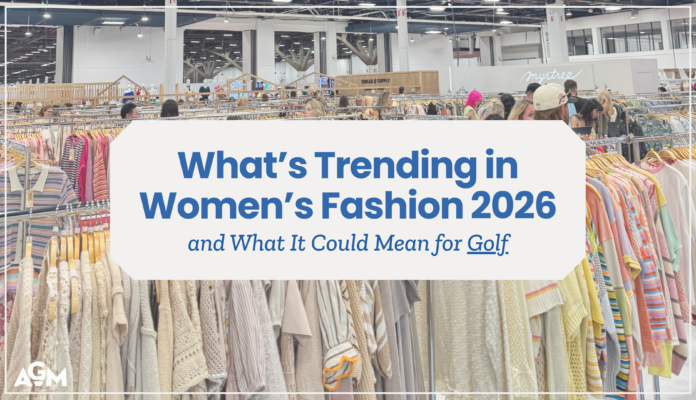
What’s Trending in Women’s Fashion 2026 and What It Could Mean for Golf
Explore Women’s Fashion 2026 trends from MAGIC Las Vegas and see how lace, color, prints [...]
Oct
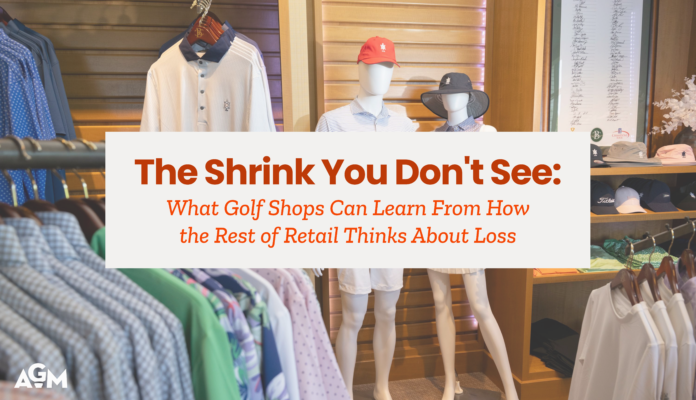
The Shrink You Don’t See: What Golf Shops Can Learn from How the Rest of Retail Thinks About Loss
Shrink is costing golf shops more than theft. See how tighter operations, better habits and [...]
Oct

Tools and Tech Ideas to Improve Your Golf Shop Sales & Engagement
How can tools and tech turn your shop into an experience? Explore practical ideas for [...]
Oct
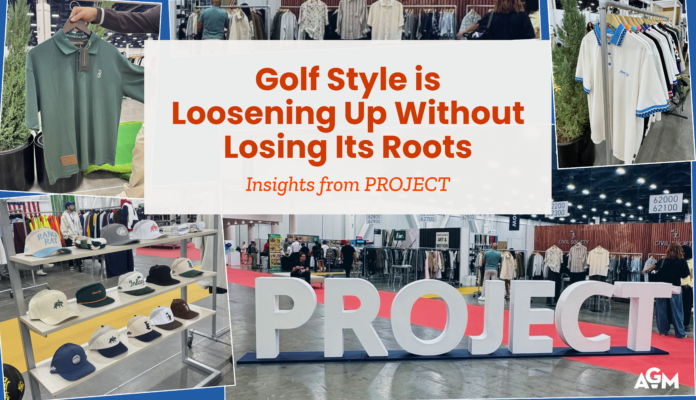
Golf Style is Loosening Up Without Losing Its Roots
Golf style is evolving with bold polos, textures and streetwear influence, helping retailers reach younger [...]
Sep
Registration Is Open for the 2027 AGM Retail Conference
It's official: registration is now open for the 2027 AGM Retail Conference! See what’s ahead [...]
Sep
Mahjong Is Finding a Home at Golf and Country Clubs
Is mahjong on your golf shop radar? Discover why the game is growing at clubs [...]
Sep
What Two Fashion Shows Told Us About Your Next Apparel Order
See what two fashion shows revealed about Spring/Summer 2027 trends and how they can shape [...]
Sep
Football Season in the Golf Shop: Displays, Promotions and Member Engagement Ideas
Bring football season into the golf shop with spirited displays, friendly rivalries, game-day promotions and [...]
Sep